You Won’t Believe This Urban Hike Near Boudhanath
Tucked just outside Kathmandu, Boudhanath isn’t just a spiritual hub—it’s a gateway to something unexpected: urban hiking with soul. I never thought walking near a city could feel this alive. Between prayer flags, temple rhythms, and mountain whispers in the air, I discovered a trail that blends city energy with mountain serenity. This is urban exploration redefined—authentic, grounded, and absolutely mind-blowing. The moment you step beyond the bustling ring road and into the quieter lanes surrounding the stupa, the pace of life shifts. The scent of burning juniper fills the air, bells chime softly from monastery rooftops, and the hum of devotion pulses beneath your feet. What unfolds is not a wilderness trek in the traditional sense, but something more intimate: a journey where culture, nature, and daily life converge on a single path rising gently into the hills.
The Unexpected Trailhead: Finding Nature in the City
Boudhanath Stupa, one of the largest Tibetan Buddhist shrines in the world, stands as a beacon of peace amidst the ever-moving currents of Kathmandu. To most visitors, it is a destination for prayer, pilgrimage, or quiet reflection. Yet just beyond its whitewashed dome and golden spire, an overlooked network of footpaths begins to climb—slowly, almost secretly—into the green folds of the surrounding hills. There is no grand sign marking the start of the hike; instead, the trail reveals itself through subtle shifts in terrain and atmosphere. As you walk east from the stupa, past rows of family-run teahouses and small shops selling butter lamps and mala beads, the urban fabric begins to thin. Narrow alleys branch off, leading upward through clusters of traditional brick homes with terracotta roofs.
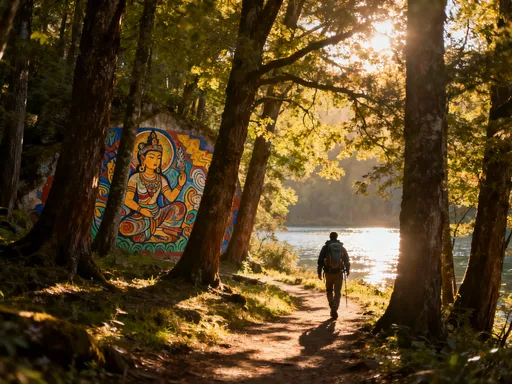
These informal pathways, worn smooth by generations of foot traffic, connect neighborhoods that exist in harmony with the natural slope of the land. Terraced gardens cling to steep inclines, growing mustard greens and radishes tended by local women in bright saris. Monasteries perch on ridgelines, their prayer wheels spinning gently in the breeze. The transition from city to trail is so gradual that you might not even notice when you’ve officially left the paved streets behind. One moment you’re passing a street vendor frying sel roti, the next you’re stepping onto a dirt path flanked by wild marigolds and the occasional chorten wrapped in faded prayer flags.
Sensory contrasts define this threshold zone. The sharp tang of incense from nearby temples mingles with the earthy smell of dry soil and sun-warmed stone. Monks in maroon robes walk silently alongside schoolchildren carrying backpacks, both heading uphill for different reasons. As the sounds of motorbikes and honking rickshaws fade, replaced by birdsong and the distant clang of a temple bell, a profound sense of stillness settles in. It’s here, in this quiet interweaving of urban life and natural ascent, that the true magic of the Boudhanath hike begins to unfold.
Why Hike Here? The Magic of Urban-Adjacent Nature
In recent years, urban hiking has emerged as a powerful antidote to the fast-paced, screen-dominated lives many of us lead. Unlike remote mountain treks that require days of planning and travel, urban-adjacent trails offer immediate access to nature without sacrificing convenience. The hike near Boudhanath exemplifies this growing trend, blending physical activity with cultural immersion in a way few other city walks can match. What sets it apart is not just proximity, but depth—the ability to experience layers of history, spirituality, and community life while engaging in gentle exercise.
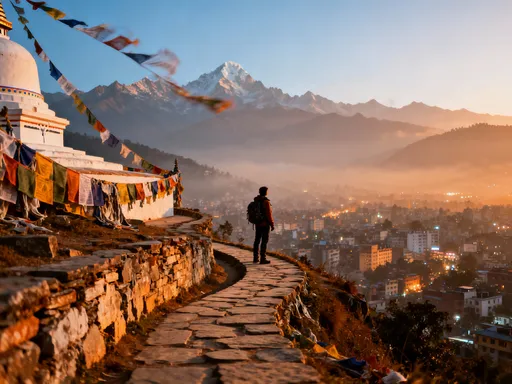
For travelers and locals alike, the appeal lies in its accessibility. Within minutes of leaving central Kathmandu, you can be walking through landscapes that feel worlds away from the city’s chaos. The trail offers modest elevation gain, rising from about 1,400 meters at the stupa to nearly 1,800 meters at its highest accessible point, making it ideal for beginners or those seeking a low-impact outdoor experience. Yet despite its ease, the journey delivers panoramic views of the Kathmandu Valley, with glimpses of distant snow-capped peaks like Langtang on clear mornings.
Beyond the physical benefits—improved circulation, reduced stress, enhanced mood—the psychological impact of such hikes should not be underestimated. Being in motion, surrounded by greenery and human warmth, creates a unique form of mindfulness. You are neither fully in the city nor entirely in the wilderness, but in a liminal space where both coexist. This balance allows for reconnection—not only with nature but with oneself. For mothers, caregivers, and women managing busy household routines, this kind of accessible retreat offers a rare opportunity to breathe deeply, move freely, and reflect without needing to travel far or take extended time away from responsibilities.
Mapping the Route: From Stupa to Skyline View
The most intuitive starting point for the hike is the eastern edge of the Boudhanath complex, where Sankhu Road begins its slow climb out of the valley. From here, follow the road as it narrows into a single lane, passing small schools, community centers, and family compounds with flowering jasmine vines climbing their walls. After approximately 15 minutes of walking, look for a stone staircase branching off to the right, marked only by a simple wooden post with a faded arrow pointing uphill. This marks the unofficial beginning of the footpath into Chuchepati and beyond.
The route ascends gradually, alternating between short stretches of paved lane, compacted dirt paths, and hand-built stone steps maintained by local residents. Along the way, hikers pass small shrines tucked into rock faces, their prayer flags fluttering like whispered blessings. Around the 45-minute mark, the forest thickens, offering welcome shade from rhododendron and pine trees. A small gompa perched on a ridge becomes visible—a quiet retreat often occupied by nuns engaged in daily chanting and meditation.
By the time you reach the 1,500-meter elevation zone, the city sprawl begins to recede below, revealing a sweeping view of the Kathmandu Valley. On clear days, the vista includes patchwork fields, scattered villages, and the shimmering outline of the Himalayas in the distance. This section of the trail is especially rewarding for photography and quiet contemplation. The path continues for another 30–40 minutes to a high point near Shivapuri National Park’s buffer zone, where birdwatchers may spot Himalayan bulbuls or red-billed blue magpies flitting through the canopy. While the full loop can take 2.5 to 3 hours round-trip, hikers are free to turn back at any point, making it a flexible option for all fitness levels.
Culture on the Climb: More Than Just a Walk
What transforms this hike from a simple nature walk into a meaningful journey is the living culture that surrounds it. Every step reveals a new layer of daily life in the Kathmandu hills—scenes that no museum or guided tour could fully capture. Children wave from open-air classrooms as you pass, their laughter echoing down the slope. Elderly women kneel beside terraced plots, planting vegetables with practiced hands, while men balance heavy loads of firewood on their backs using traditional rope harnesses.
Along the trail, communal water spouts—crafted from carved stone and often adorned with small offerings—serve as gathering points for neighbors. These dhunge dharas, part of an ancient water system still in use today, reflect centuries-old traditions of shared resources and community stewardship. In narrow alleyways between homes, you might glimpse a row of brass prayer wheels set into a wall, spun by passersby seeking merit. Some houses feature rooftop platforms used for drying grains or for quiet meditation at dawn.
Walking through these spaces fosters a deeper understanding of resilience, simplicity, and interdependence. Unlike packaged tourist experiences, this hike invites genuine, unscripted moments of connection. A smile exchanged with a grandmother carrying a basket of herbs, a shared pause at a shaded rest spot, or the sight of a young monk reading scripture under a tree—all contribute to a sense of belonging, even as a visitor. Movement becomes a form of learning, allowing insights to unfold naturally with each footfall. For women who often serve as the emotional anchors of their families, such experiences can be quietly transformative, offering perspective, gratitude, and renewed inner strength.
Practical Tips: When, What, and How to Hike Smart
To make the most of the Boudhanath urban hike, timing and preparation are key. The best time to begin is early in the morning, ideally between 6:30 and 7:30 a.m. Not only does this allow you to avoid the midday heat, but it also offers the chance to witness monks on their morning rounds, families heading to work and school, and the soft golden light that bathes the valley at sunrise. Mornings are also quieter, with fewer vehicles and a greater sense of serenity along the trail.
Footwear is essential—sturdy walking shoes with good grip are recommended, especially during the monsoon season when paths can become slippery. Lightweight, breathable clothing in layers works best, allowing for adjustments as temperatures rise with elevation. A small backpack with water (at least one liter, as there are no reliable refill points on the upper trail), a sun hat, and sunscreen are practical additions. While the hike is safe and well-traveled, carrying a basic first-aid kit with blister treatment and antiseptic wipes is a wise precaution.
Getting to Boudhanath from central Kathmandu is straightforward and affordable. A taxi or ride-hailing service typically costs under $5 one way and takes 20–30 minutes depending on traffic. Local buses run frequently from Ratna Park and other central hubs, though they can be crowded and less direct. For those staying in Thamel or Patan, organizing a shared ride with fellow travelers or hotel staff can be both economical and convenient. Remember to carry some local currency for small purchases, such as a warm cup of milk tea from a roadside stall after your descent.
Seasons and Safety: Know Before You Go
Understanding seasonal conditions is crucial for a safe and enjoyable hike. The optimal times to visit are during the post-monsoon months of October and November, when skies are clear, visibility is excellent, and daytime temperatures hover between 18°C and 24°C (65°F–75°F). Spring, from March to May, is another excellent window, offering mild weather and blooming rhododendrons along the trail. These periods provide the best combination of comfort and scenic beauty.
The monsoon season, which runs from June to September, brings significant challenges. Heavy rains turn dirt paths into mud, increase the risk of landslides on steeper sections, and attract leeches in shaded, humid areas. Visibility is often limited by fog and cloud cover, reducing the panoramic rewards of the higher elevations. While short, light showers can add a refreshing dimension to the hike, prolonged rain makes the trail less suitable for casual walkers, especially those unfamiliar with mountain terrain.
Safety on this route is generally high. Crime rates in the area are low, and locals are typically welcoming and helpful. However, for those new to hiking in Nepal or uncertain about navigation, hiring a local guide for a few hours can provide peace of mind and enrich the experience with cultural insights. Guides can be arranged through guesthouses near Boudhanath or through reputable travel agencies in Kathmandu. They often know alternative routes, hidden viewpoints, and seasonal conditions that enhance the journey. Additionally, letting someone know your planned return time and carrying a fully charged phone with offline maps is a simple but effective safety measure.
Beyond the Hike: Extending the Journey
The experience doesn’t have to end when you return to Boudhanath. Many hikers find it deeply satisfying to conclude their walk with a warm meal or a quiet moment of reflection. The area around the stupa is home to several cozy cafes offering organic teas, freshly baked bread, and simple vegetarian dishes. Sitting on a rooftop terrace with a view of the stupa, sipping ginger honey tea, allows the mind and body to integrate the morning’s journey.
For those interested in exploring further, a post-hike visit to a local Newari restaurant in nearby Khokana or Thimi offers a delicious introduction to traditional cuisine. Dishes like yomari (sweet rice dumplings), bara (lentil pancakes), and chatamari (rice flour crepes) provide a flavorful connection to the region’s rich culinary heritage. These meals, often prepared in wood-fired kitchens and served on brass plates, are more than nourishment—they are acts of cultural preservation.
More adventurous travelers may consider extending their day with a visit to Bhaktapur, a UNESCO World Heritage site known for its ancient temples and pottery squares, or Nagarkot, a hilltop village famed for sunrise views over the Himalayas. Both are accessible by short drives and can be combined with the Boudhanath hike for a full day of discovery. Yet even without venturing farther, the hike itself offers a complete and fulfilling experience—one that redefines adventure not as escape, but as deeper connection. It reminds us that wonder doesn’t always require distant destinations. Sometimes, it’s found just beyond the edge of the familiar, waiting on a quiet path lined with prayer flags and possibility.